Introduction: In the hospital system integration project, the topic "Hospital System Integration Analyzes Data Security and Compliance of Chinese Servers in Thai Hospitals" focuses on the integration of legal, technical, and operational aspects to ensure medical data is interoperable and complies with regulatory requirements.
Factors such as cross-border collaboration, language support, and cost often drive Thai hospitals to adopt Chinese-language servers or suppliers. Such deployments need to meet interoperability requirements while ensuring compliance and risk control for data sovereignty and privacy protection.
Thailand's PDPA regards health records as sensitive personal data, requiring special protection and a reasonable legal basis. Meanwhile, if data is processed on Chinese servers, relevant parties need to assess the impact of laws in both countries on data flow and storage and take corresponding compliance measures.
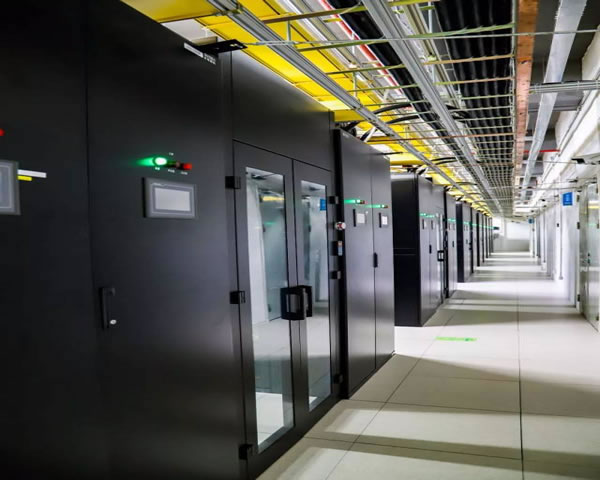
Medical data typically includes sensitive categories such as medical records, imaging, test results, and genetic information. Before system integration, data classification and grading should be completed to clarify which data is allowed for cross-border transmission and which requires localized storage or additional desensitization processing.
Standards such as HL7 FHIR, DICOM, and the FHIR API gateway can enhance interoperability. Integration design should be guided by the principle of minimum necessity, using standardized interfaces, message queues, and identity assertions to reduce interface security risks.
During data transmission, strong encryption (such as TLS) should be enabled, and on the storage side, disk and database layer encryption, key separation, and strong key management should be implemented. Partitioning, partitioning, and minimizing storage help reduce the scope of leaks and compliance costs.
Implement role-based access control (RBAC), multi-factor authentication (MFA), and the principle of least privilege. Temporary escalation and approval flows are implemented for sensitive operations, and accounts and permissions are regularly reviewed to prevent privilege inflation.
Build a complete audit chain and security monitoring system, including access logs, change records, and SIEM alerts. Regular vulnerability scans, penetration tests, and compliance audits are conducted to ensure traceability and timely response capabilities.
Sign Data Processing Agreements (DPAs) with Chinese server providers or integrators to clarify responsibilities, compliance obligations, and consequences of breach. Conduct security and compliance due diligence on suppliers and incorporate ongoing monitoring mechanisms.
In cross-border scenarios, a Data Protection Impact Assessment (DPIA) should be conducted first, and measures such as contract protection, consent management, or technical isolation should be adopted according to the PDPA and relevant regulations, and localized storage needs should be assessed if necessary.
Summary and Recommendations: Hospital System Integration Analysis Data Security and Compliance of Chinese servers in Thai hospitals should establish a risk-oriented governance framework, combined with legal assessments, technical controls, and operational processes, and continuous training, drills, and audits to form a controllable and compliant cross-border medical data processing system.
- Latest articles
- A Beginner's Tutorial To Test Singapore VPS Compatibility With Nephi
- Practical Tool Recommendation: Where Can Hong Kong Native IP Guangsuanyun Addresses Be Used For Speed Testing?
- Recommended Japanese VPS Normal Latency Measurement Tools And Result Interpretation Methods
- Common IP Setting Errors And Solutions For Singapore Servers Explained In Detail
- Compare Different Platforms To Teach You How To Efficiently And Securely Purchase Native Taiwan IPs
- Detailed Tutorial: Learn How To Properly Use Ping Taiwan Servers For Link Testing On Different Systems
- Differences And Applicable Scenarios Between CN2 GIA Hong Kong And Other CN2 Types Of Lines
- Hospital System Integration Analysis: Data Security And Compliance Of Chinese Servers In Thai Hospitals
- Using High-definition Images Of The Hong Kong Data Center Office To Evaluate The Rationality Of Cabinet Spacing And Air Conditioning Layout
- International Deployment Guide For Multilingual Websites Supported By Cloud Servers In The Philippines And Cambodia
- Popular tags
-

How To Choose A High-speed Thai Server With Suitable Bandwidth To Reduce Network Congestion
This article introduces how to select high-speed servers in Thailand with suitable bandwidth to reduce network congestion, covering practical advice such as the difference between bandwidth and throughput, traffic assessment, geolocation and latency, bandwidth types, link quality, peak management, and monitoring. -
A Customized Guide For Ranking And Using Thailand Accelerated Servers Based On Regional Needs
Customized Recommendations Based on Regional Needs for Thailand Acceleration Server Ranking Guide: Introduces evaluation metrics, regional strategies, testing methods, deployment optimization, and compliance considerations, helping businesses and individuals choose the most suitable Thailand acceleration servers based on different regional requirements. -
Key Points Of Performance Testing: Steps For Comparing Before And After The Upgrade Of Thai Servers
This article systematically introduces the key points of performance testing and the comparison steps before and after the upgrade of the yy Thai server. It covers preparation, baseline collection, upgrade execution, verification after the upgrade, as well as result analysis and regression testing, and is suitable for operations and testing engineers.